Property Health Plan

Advice

Is Your Bathroom Ventilation Working Properly?

Learn how to check bathroom extractor fans, vents, silicone and seals to reduce condensation, damp and mould and protect your property.
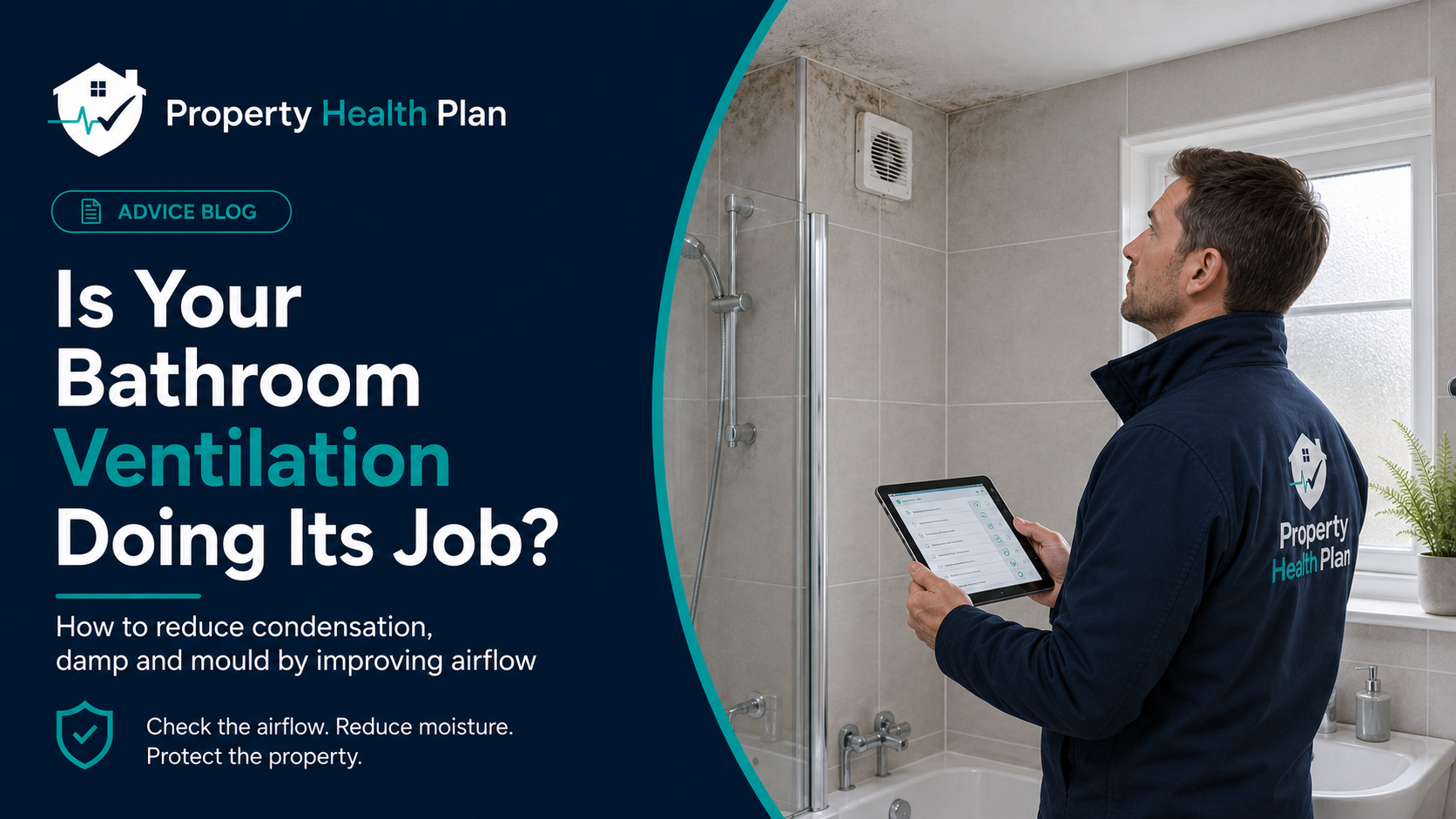

Is Your Bathroom Ventilation Doing Its Job?

Bathrooms produce a significant amount of moisture through bathing, showering and the use of hot water.

Effective ventilation helps remove this moisture before it settles on windows, ceilings, walls and other cold surfaces. When airflow is restricted or an extractor fan is not operating properly, condensation can remain in the room and increase the risk of damp, mould and damage to finishes.

A few straightforward checks can help landlords, managing agents and occupants identify ventilation problems before they develop into larger maintenance concerns.

Why bathroom ventilation matters

Warm, moisture-laden air is released whenever a bath or shower is used. As this air comes into contact with colder surfaces, it cools and forms condensation.
Some condensation immediately after bathing is normal. However, persistent moisture that remains for long periods may indicate that the room is not being ventilated effectively.

Poor bathroom ventilation can contribute to:
  •  Condensation on windows and walls 
  •  Mould growth on ceilings and around seals 
  •  Peeling paint or damaged decoration 
  •  Damp staining 
  •  Deteriorating silicone and grout 
  •  Musty smells 
  •  Swollen timber or composite materials 
  •  Damage to window frames and bathroom fittings 


The longer surfaces remain wet, the greater the opportunity for mould and material deterioration to develop.

How bathroom extractor fans should help

An extractor fan is designed to remove humid air from the bathroom and discharge it outside the property.

Depending on the installation, the fan may operate:
  •  When the bathroom light is switched on 
  •  Using a separate wall switch 
  •  For a set period after the light is turned off 
  •  When a humidity sensor detects increased moisture 
  •  Continuously at a low rate, with a higher boost setting when required 


A fan may appear to be working because it makes a noise, but this does not necessarily mean it is moving enough air. Dust, blocked ductwork, poor installation or mechanical wear can significantly reduce its effectiveness.

Simple bathroom ventilation checks

Test whether the extractor fan operates

Switch on the bathroom light or use the separate fan control and listen for the fan to start.

Check whether it:
  •  Starts promptly 
  •  Continues to operate consistently 
  •  Runs after the light is switched off, where a timer is fitted 
  •  Responds to increased humidity, where a humidity sensor is installed 
  •  Produces a noticeable airflow 


A common basic check is to hold a lightweight piece of tissue near the fan cover. It should be drawn gently towards the grille when the fan is operating.

Do not remove the fan cover or touch internal electrical components unless you are competent and authorised to do so.

Clean dusty fan covers


Dust and lint can collect across the extractor fan grille and restrict airflow.

A heavily coated cover can reduce the fan’s effectiveness even when the motor is operating normally.

The external cover can usually be cleaned carefully using a dry or slightly damp cloth after following the manufacturer’s instructions and taking appropriate electrical precautions.

Avoid spraying cleaning products directly into the fan.

Where the fan remains weak after the visible cover has been cleaned, the ductwork, outlet grille or fan mechanism may require further investigation.

Look for staining above showers and on ceilings

The ceiling above a bath or shower is often one of the first places where inadequate ventilation becomes visible.

Look for:
  •  Dark spotting 
  •  Brown or yellow staining 
  •  Peeling or bubbling paint 
  •  Flaking decoration 
  •  Persistent moisture 
  •  Mould around the ceiling edges 
  •  Discolouration near the extractor fan 


Staining does not always mean the extractor fan is the only cause. Plumbing leaks, roof defects and water ingress from above should also be considered.

The location, pattern and timing of the staining can help identify the likely source.

Check the silicone around baths and shower trays

Silicone creates a flexible waterproof seal around baths, shower trays, screens and other bathroom fittings.

Over time, it can split, lift, shrink or become affected by mould.

Check for:
  •  Gaps in the silicone 
  •  Sections pulling away from the surface 
  •  Cracks or splits 
  •  Black mould staining 
  •  Missing sections 
  •  Water appearing outside the bath or shower area 


Damaged silicone can allow water to reach hidden areas beneath baths, behind tiles or inside flooring.

Simply applying new silicone over failed material is unlikely to create an effective long-term repair. The old sealant may need to be removed, the area dried and cleaned, and a suitable replacement applied correctly.

Inspect bath and shower seals

Pay attention to every junction where water could escape, including:
  •  The edge of the bath 
  •  The perimeter of the shower tray 
  •  Shower-screen seals 
  •  Corners and wall junctions 
  •  Tap penetrations 
  •  Pipe entries 
  •  Tile edges 
  •  Grout lines 


Run the shower briefly and observe whether water escapes onto the floor or behind the screen.

Repeated water escape can damage flooring, skirting boards, ceilings below and concealed timber structures.

Keep ventilation openings clear

Bathroom ventilation may rely on more than the extractor fan alone.

Air needs to enter the room so that humid air can be removed effectively. Relevant openings may include:
  •  Trickle vents 
  •  Door undercuts 
  •  Wall vents 
  •  Air-transfer grilles 
  •  Openable windows 
  •  Mechanical ventilation inlets 

Do not cover vents with furniture, towels, decorations or storage.

Closing or blocking every opening can reduce airflow and make it harder for the extractor fan to perform effectively.

Report noisy or ineffective fans

A fan that becomes excessively noisy may have a worn motor, loose component, obstruction or ducting problem.

Warning signs include:
  •  Grinding or rattling sounds 
  •  Intermittent operation 
  •  Very weak airflow 
  •  The fan stopped unexpectedly 
  •  Excessive vibration 
  •  A burning smell 
  •  Failure to run after the light is switched on 
  •  Condensation remains for long periods after use 


A fan that is unusually quiet may also have stopped working entirely.

Electrical repairs and replacements should be completed by an appropriately qualified professional.

Signs that the bathroom may not be ventilating effectively

The following conditions may suggest that moisture is not being removed quickly enough:
  •  The mirror and window remain wet for a long time 
  •  Water regularly runs down the walls 
  •  Mould repeatedly returns after cleaning 
  •  The room smells damp or musty 
  •  Paint is peeling from the ceiling 
  •  Silicone becomes mouldy soon after replacement 
  •  Towels remain damp for extended periods 
  •  Condensation appears in nearby rooms 
  •  The extractor fan has little or no noticeable airflow 


These signs should be considered together with the way the bathroom is heated, used and ventilated.

How heating affects condensation

Ventilation and heating work together.

Cold walls and ceilings are more likely to attract condensation because warm, humid air cools rapidly when it reaches them. Maintaining a suitable and reasonably consistent temperature can help reduce this effect.

However, heating alone will not remove moisture from the property. The humid air still needs to be ventilated outside.

A balanced approach should include:
  •  Appropriate heating 
  •  Effective extraction 
  •  Clear ventilation openings 
  •  Prompt reporting of leaks 
  •  Suitable maintenance of seals and finishes 


Do not assume every mould problem is caused by occupant behaviour

Bathroom mould can have several contributing causes.

These may include:
  •  A failed or undersized extractor fan 
  •  Blocked ductwork 
  •  Inadequate background ventilation 
  •  Insufficient heating 
  •  Cold bridging 
  •  Plumbing leaks 
  •  Damaged seals 
  •  Water ingress 
  •  Poorly insulated surfaces 
  •  High levels of moisture production 


The underlying cause should be investigated rather than treating visible mould as a purely cosmetic issue.

Cleaning the surface may temporarily remove the appearance of mould, but it will often return if the moisture source remains.

When a specialist investigation may be needed

Professional advice may be appropriate where:
  •  The fan does not operate 
  •  Airflow remains weak after cleaning 
  •  Mould repeatedly returns 
  •  There is significant ceiling or wall staining 
  •  Water is escaping beneath the bath or shower 
  •  Electrical fittings are affected by moisture 
  •  The duct does not appear to discharge outside 
  •  The room has no effective ventilation 
  •  Damage is visible in the room below 
  •  The cause of the moisture cannot be established 


Where electrical equipment is wet, damaged or producing a burning smell, avoid using it and arrange prompt professional assessment.

Photographing and recording ventilation concerns

Clear photographic evidence helps create a useful record of the bathroom’s condition.

Capture:
  •  The full bathroom layout 
  •  The extractor fan and ventilation openings 
  •  Staining above the bath or shower 
  •  Damaged silicone or seals 
  •  Mould-affected areas 
  •  Water-damaged finishes 
  •  Any visible leak 
  •  The condition after the repairs are completed 


Record the date, location and circumstances in which the issue was identified.

For landlords and managing agents, this makes it easier to monitor whether conditions are improving and to provide contractors with clearer information.

Make bathroom checks part of routine inspections

Bathroom ventilation should be reviewed during scheduled property visits, at tenancy changes and whenever damp or mould is reported.

A structured inspection should consider:
  •  Extractor-fan operation 
  •  Visible airflow restrictions 
  •  Trickle vents and other openings 
  •  Window condition 
  •  Ceiling and wall staining 
  •  Silicone and grout 
  •  Bath and shower seals 
  •  Signs of plumbing leaks 
  •  Heating provision 
  •  Mould or musty smells 
  •  Water damage to adjoining rooms 


Regular checks create an opportunity to address minor defects before they lead to larger repairs.

Check the airflow. Reduce moisture. Protect the property.

Effective bathroom ventilation helps control condensation, reduce the risk of damp and mould, and protect the building’s finishes and fabric.

A quick check of the extractor fan, ventilation openings, seals and surrounding surfaces can reveal early signs that attention is required.

Property Health Plan provides scheduled internal and external property inspections for landlords, estate agents and housing providers. Inspections are supported by photographic 

evidence, structured condition reports and practical remediation recommendations.

Check the airflow. Reduce moisture. Protect the property.

Visit propertyhealthplan.co.uk to learn more.


Protect Your Portfolio
Reduce Insurance Costs
Enhance Client Confidence
Increase Asset Value