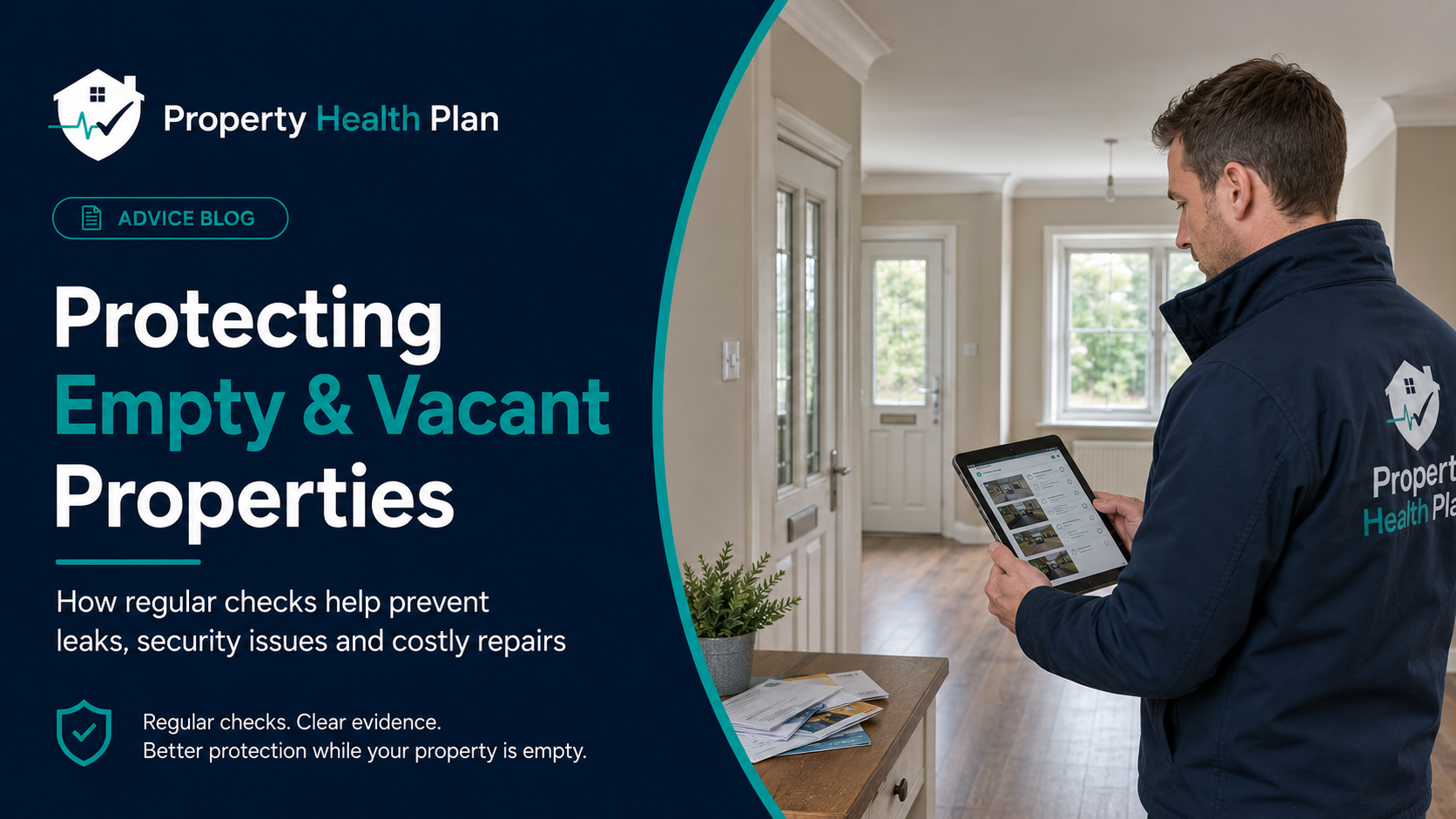
Is Your Property Empty or Temporarily Vacant?
An empty property can develop maintenance, security and water-system problems surprisingly quickly.
A small leak may remain undiscovered, a blocked gutter could allow water to enter the building, or a period of cold weather may damage unprotected pipework. Accumulated post and an unmaintained exterior can also make it obvious that nobody is regularly visiting the property.
Whether a home is between tenancies, awaiting refurbishment, being prepared for sale or likely to remain vacant for an extended period, scheduled inspections can help protect its condition and identify concerns before they become costly repairs.
Why vacant properties need regular inspections
When a property is occupied, tenants or homeowners will usually notice problems such as dripping taps, loss of heating, unusual smells or visible damp.
In an empty property, these early warning signs can go unnoticed for days or weeks.
Potential issues include:
- Hidden plumbing leaks
- Water damage beneath sinks or appliances
- Damp and mould growth
- Frozen or burst pipes
- Blocked gutters and drains
- Heating-system failures
- Forced entry or vandalism
- Accumulated post
- Deterioration around windows and doors
- Water-hygiene risks within little-used systems
- Changes to insurance cover or policy conditions
A regular inspection provides an opportunity to identify these concerns while they are still manageable.
How frequently should an empty property be inspected?
The appropriate inspection frequency will depend on the individual property, its condition, the time of year, and the insurer's requirements.
A newer property that will be empty for a short period may present fewer risks than an older home with historic damp, plumbing or security concerns.
Factors to consider include:
- How long will the property remain vacant
- The age and condition of the building
- The season and expected weather
- Previous leaks or maintenance issues
- The type of heating and plumbing systems
- The property’s location and security
- Whether refurbishment work is taking place
- The conditions contained within the insurance policy
Insurers may specify how often a vacant property must be visited and what evidence should be retained. The individual policy should therefore be checked rather than assuming standard cover will continue unchanged.
What to check during each visit
A vacant-property inspection should follow a consistent checklist so that important areas are not overlooked.
Check beneath sinks and around plumbing
Open cupboards beneath the kitchen and bathroom sinks and inspect the pipework carefully.
Look for:
- Water droplets
- Damp patches
- Staining
- Swollen shelving
- Rusted fittings
- Musty smells
- Water is collecting on the cupboard base
Also check around toilets, baths, showers, boilers, radiators, cylinders, washing machine connections, and any other water-fed appliances.
Where appropriate, briefly run taps and observe the pipe joints and waste connections for visible drips.
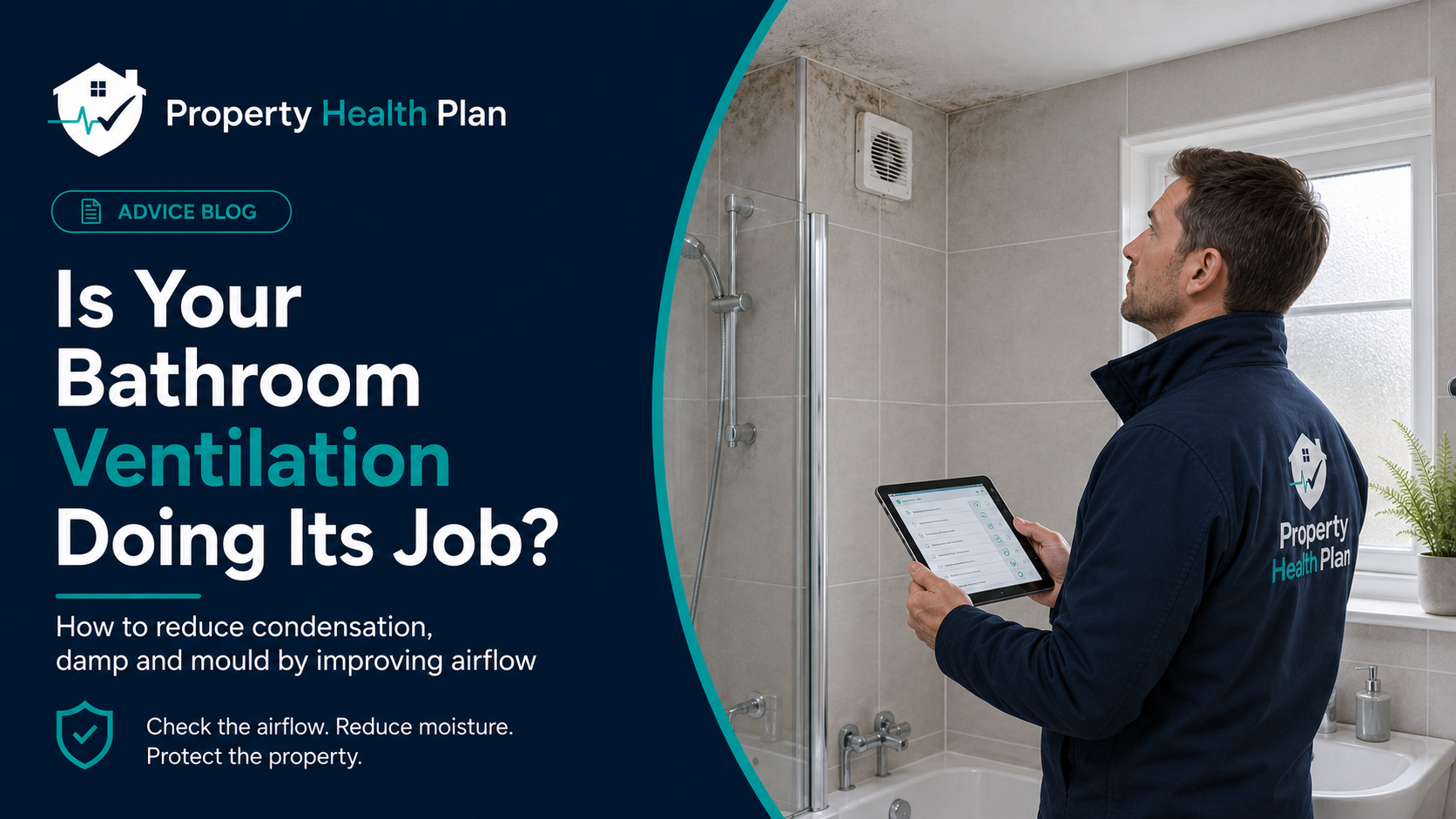
Look for signs of damp and water damage
Inspect walls, ceilings, floors and window areas for:
- Damp patches
- Peeling paint
- Bubbling wallpaper
- Water staining
- Mould growth
- Musty odours
- Damaged plaster
- Warped flooring
- Discoloured skirting boards
Pay particular attention to rooms beneath bathrooms, areas near external walls, and locations where previous water-related defects have occurred.
Photograph any concerns so they can be compared during future visits.
Maintain suitable heating and frost protection
During colder periods, appropriate heating and frost protection may help reduce the risk of frozen pipework and condensation.
The correct approach will depend on the property and its systems, but considerations may include:
- Maintaining a suitable background temperature
- Confirming that the heating system is operating
- Checking boiler fault indicators
- Looking for leaks around radiators
- Ensuring exposed pipework is adequately protected
- Reviewing settings after power interruptions
- Checking that thermostats and frost-protection controls are working
Where a property is being drained down or winterised, this should be completed by a competent person and documented clearly.
Check doors, windows and security
Vacant properties can be more vulnerable to forced entry, vandalism and weather-related damage.
Inspect:
- Front and rear doors
- Window locks and glazing
- External gates
- Outbuildings and garages
- Boundary fencing
- External lighting
- Alarm systems
- Signs of tampering
- Damage around locks or frames
- Unexpected access or occupation
The property should appear secure and regularly maintained without creating obvious signs that it is unoccupied.
Any evidence of forced entry should be treated seriously and reported to the appropriate parties.
Remove accumulated post
Post collecting behind the door can indicate that nobody is visiting the property.
During each inspection:
- Remove or redirect accumulated post
- Check for urgent correspondence
- Clear leaflets from the doorway
- Remove newspapers or parcels
- Avoid allowing bins to remain permanently unattended
- Keep the entrance looking maintained
Where appropriate, mail can be redirected for the duration of the vacancy.
Inspect gutters, drains and external pipework
External rainwater defects can cause significant damage when nobody is present to notice them.
Check for:
- Blocked or overflowing gutters
- Loose gutter sections
- Leaking joints
- Disconnected downpipes
- Vegetation growing in gutters
- Blocked drainage gullies
- Standing water near the property
- Damaged external pipework
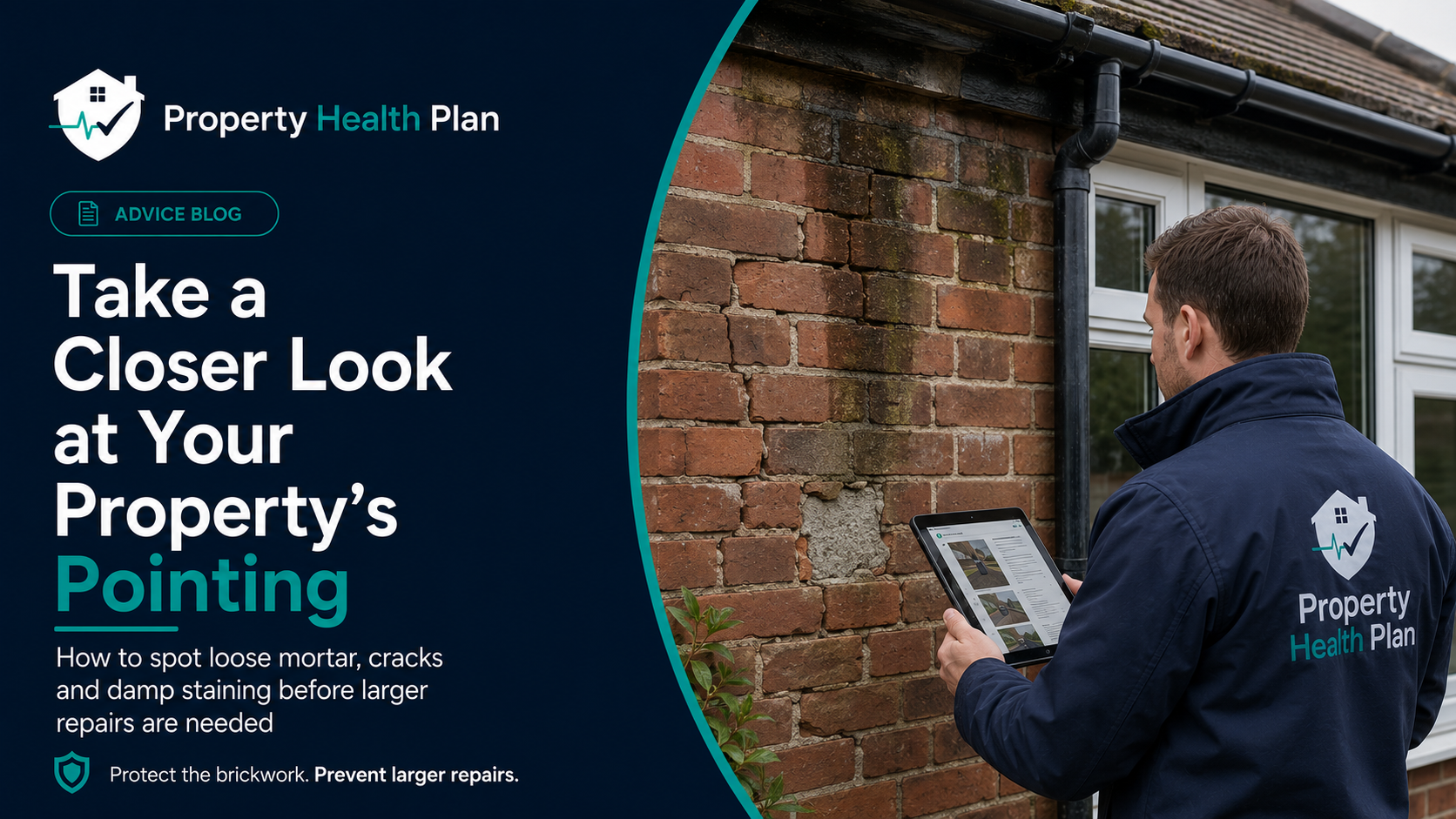
- Damp staining beneath the roofline
- Signs of water ingress around windows and doors
After heavy rain, observe how water drains around the building and whether it is collecting near the external walls.
Check the general condition of the exterior
Walk around the property and inspect visible areas such as:
- Rooflines
- Brickwork and pointing
- Render
- Windows and doors
- Paths and steps
- External drains
- Fences and gates
- Gardens and vegetation
- External lighting
- Meter boxes
- Outbuildings
Vegetation should not be allowed to obstruct entrances, cover ventilation openings or create the appearance that the property has been abandoned.
Managing water in infrequently used systems
Water that remains in little-used outlets and pipework may require additional management.
Landlords and others responsible for premises should consider potential water-hygiene risks, including the possibility of Legionella bacteria developing where conditions allow.
In many domestic properties, a suitable assessment may conclude that the risk is low. However, the risk should still be considered and proportionate controls put in place.
An appropriate water-hygiene plan may include:
- Identifying infrequently used outlets
- Avoiding unnecessary water stagnation
- Flushing outlets at suitable intervals
- Maintaining appropriate water temperatures
- Checking tanks, cylinders and pipework
- Cleaning or descaling showerheads where required
- Keeping records of checks and actions
- Reviewing the system before the property is occupied again
Care should be taken when flushing outlets, particularly where aerosol or spray could be produced. Specialist advice should be obtained where the condition of the water system or the appropriate controls is uncertain.
Review the property’s insurance requirements
Standard insurance cover may change when a property becomes unoccupied for a specified period.
Requirements vary between policies, but an insurer may ask for:
- Notification that the property is vacant
- Inspections at specified intervals
- Written inspection records
- Suitable heating or winter precautions
- Water systems to be drained or isolated
- Post to be removed
- Doors and windows to remain secure
- Alarm systems to remain active
- Visible defects to be repaired promptly
Failing to follow policy conditions could affect the available cover if damage or a break-in occurs.
The insurer or broker should therefore be informed and the policy wording reviewed before or as soon as the property becomes vacant.
Keep a clear record of every inspection
A vacant-property visit should create more than a verbal confirmation that everything appears satisfactory.
A useful inspection record should include:
- The property address
- Date and time of the visit
- Name of the person completing the inspection
- Areas checked
- Meter readings where appropriate
- Heating status
- Visible defects
- Security observations
- Water-system actions
- Photographs
- Recommended repairs
- Evidence of completed actions
- Date of the next visit
Time-stamped photographic evidence can help demonstrate that the property has been inspected and provide a useful comparison if its condition changes.
Warning signs that require prompt action
Some findings should not be left until the next scheduled visit.
Prompt investigation may be required where there is:
- An active plumbing leak
- Water close to electrical fittings
- Loss of heating during freezing weather
- Significant internal damp or mould
- Evidence of forced entry
- Broken glazing
- A security alarm fault
- Overflowing gutters or drains
- A burst or frozen pipe
- Unusual smells from drainage or water systems
- Significant structural cracking
- Evidence that the property has been accessed without permission
Where there is an immediate safety concern, the area should be secured and an appropriately qualified professional instructed.
Preparing the property for reoccupation
Before a new tenant or occupant moves in, the property should be reviewed to confirm that it remains safe, functional and in a suitable condition.
This may include:
- Completing outstanding repairs
- Checking heating and hot-water systems
- Reviewing electrical and gas-safety requirements
- Inspecting for damp, mould and leaks
- Checking ventilation
- Flushing and reviewing little-used water outlets
- Confirming alarms are operational
- Checking doors and windows
- Cleaning the property
- Updating the photographic condition record
- Confirming that necessary certificates and documents are current
Any concerns identified during the vacant period should be resolved or clearly communicated before occupation.
Protecting empty properties through proactive inspections
An unoccupied property should not be left entirely unattended.
Regular inspections provide an opportunity to identify leaks, damp, security concerns, drainage defects and water-system issues before they cause extensive damage.
For landlords and managing agents, a consistent inspection programme also creates clearer evidence that the property has been monitored and that appropriate action has been taken.
Property Health Plan provides scheduled internal and external property inspections supported by photographic evidence, structured condition reports and practical remediation recommendations.
Regular checks. Clear evidence. Better protection while your property is empty.
Visit propertyhealthplan.co.uk to learn more.